
Pressure washing with chemicals can be a powerful solution for industrial cleaning, masonry restoration, acid etching, and surface preparation—but it must be approached with care. When using advanced systems like Unique Industries’ Kem-O-Kleen units, operators must be trained in chemical safety and proper procedures to ensure both effective results and workplace safety.
From correct handling of cleaning agents to environmental runoff containment, this guide outlines the core best practices every industrial crew should follow when pressure washing with chemicals.
Understand the Chemicals You’re Using
Before any chemical is sprayed, it’s essential to know exactly what you’re working with. That starts with reading and understanding the product’s Safety Data Sheet (SDS). The SDS provides information on hazards, necessary protective equipment, storage instructions, first aid, and environmental risks. It’s not just a regulatory formality—it’s the blueprint for safe handling.
When pressure washing with chemicals, the products involved can range from mild detergents to highly corrosive acids used for etching or masonry cleaning. Always store chemicals in clearly labeled, sealed containers away from heat or direct sunlight. Avoid mixing products unless explicitly instructed to do so by the manufacturer.
Mastering Dilution and Application
Incorrect dilution is one of the most common mistakes in pressure washing with chemicals. Mixing solutions too strong can damage surfaces or harm workers, while overly diluted mixtures reduce cleaning effectiveness and waste resources.
Industrial systems like the Kem-O-Kleen often come equipped with built-in chemical injection controls to simplify this process. Still, operators should always follow both equipment manuals and chemical label instructions when preparing solutions.
When applying them, avoid excessive saturation. Apply with consistent motion, allow appropriate dwell time (as recommended by the product), and never let chemicals dry on the surface, which can lead to staining or degradation.
Rinsing, Runoff Containment & Environmental Protection
Proper rinsing is a pivotal part of pressure washing with chemicals. After allowing the chemical to work, thoroughly rinse with clean water at moderate pressure. Be sure to:
- Direct runoff away from storm drains
- Use containment berms or mats when working near sensitive areas
- Collect wash water where possible for responsible disposal
Environmental stewardship matters. Many detergents and surface cleaners contain compounds that are harmful if they enter waterways untreated. Federal, state, and local regulations often govern how runoff can be handled, so check requirements in your area and plan accordingly.
Proper PPE for Every Job
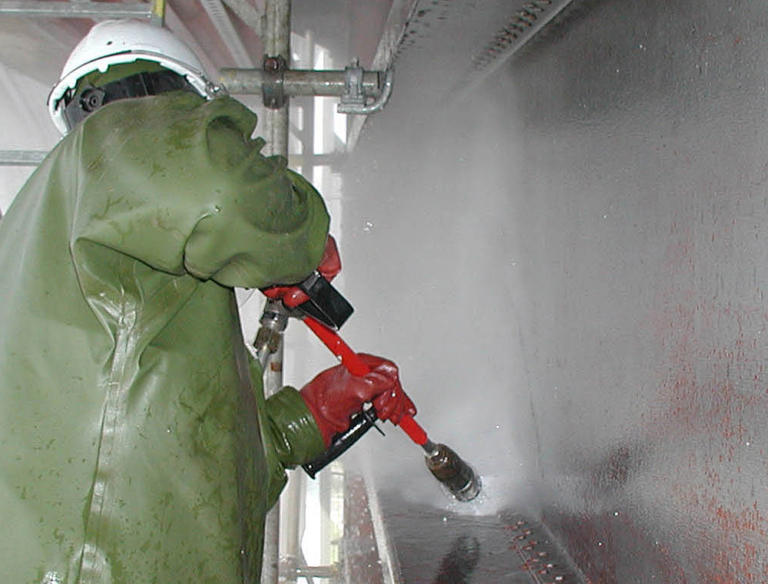
Chemical exposure is a real risk, especially during longer or large-scale operations. Personal protective equipment (PPE) is one of the simplest but most essential ways to protect workers while pressure washing with chemicals.
At a minimum, workers should wear chemical-resistant gloves, protective eyewear or a face shield, and waterproof boots. Depending on the chemical being used, additional PPE like aprons, long sleeves, or even respirators may be necessary. Always match the PPE to the chemical hazard level outlined in the SDS. Ensuring your team is properly protected is not just smart—it’s OSHA-compliant.
Safe Disposal in 3 Steps
After cleaning is complete, proper disposal of chemical waste is a must. Leaving solutions in the system or draining them carelessly can result in both environmental damage and equipment corrosion.
Here’s a basic safe disposal process:
- Neutralize when necessary. Some acid-based cleaners may need neutralization before disposal.
- Collect rinse water. Use approved containers or containment mats to collect runoff.
- Dispose responsibly. Follow local hazardous waste disposal regulations. Never pour chemicals down storm drains or into soil.
These steps protect not just your crew, but your community and surrounding ecosystem.
Consistent Training Makes the Difference
Safety isn’t just a checklist—it’s a culture. Crews that regularly handle chemical cleaning systems should receive ongoing training on chemical handling procedures, PPE, environmental safety, and emergency response protocols. Having written standard operating procedures (SOPs) for your equipment—including Kem-O-Kleen systems—is the best way to ensure consistency across multiple teams or job sites. When pressure washing with chemicals, the most successful operations are the ones that treat safety and sustainability as part of the process, not an afterthought. With the right tools, training, and mindset, industrial chemical cleaning can be safe, effective, and environmentally responsible.